

Meetings often wrap up with everyone nodding in agreement, yet nothing moves forward. You know the frustration: clear decisions made, but no one owns the next step or sets a deadline. That gap isn’t about commitment or smarts—it’s a missing habit in your meeting execution. Let’s fix that in the final five minutes with a simple checklist that turns alignment into action and fuels momentum in meetings. For more insights, visit here.
Turn Agreement into Action
You’ve reached the end of a productive meeting. Everyone agrees on the decisions made. Now, the challenge is turning those decisions into action. Without a clear next step, momentum stalls.
Common Meeting Pitfalls
The end of a meeting often feels like a conclusion, but it’s only the beginning. Many meetings end with everyone agreeing on the next steps, yet nothing happens afterward. Why? Because no one leaves with a specific task or deadline. It’s like mapping a route but not starting the journey. Most people think agreeing means progress, but without action, it’s just talk. The longer you wait to assign tasks, the less likely they’ll get done.
The Final Five Minutes Solution
Here’s the key insight: the final five minutes of your meeting can transform agreement into action. Use this time to assign tasks and set deadlines. This small change can create big results. In this brief window, clarity is your best friend. Capture the essence of what was discussed and decide who will do what by when. This isn’t just about accountability; it’s about ensuring the team moves forward with purpose. Explore a detailed guide on setting effective team agreements.
Building Execution Habits
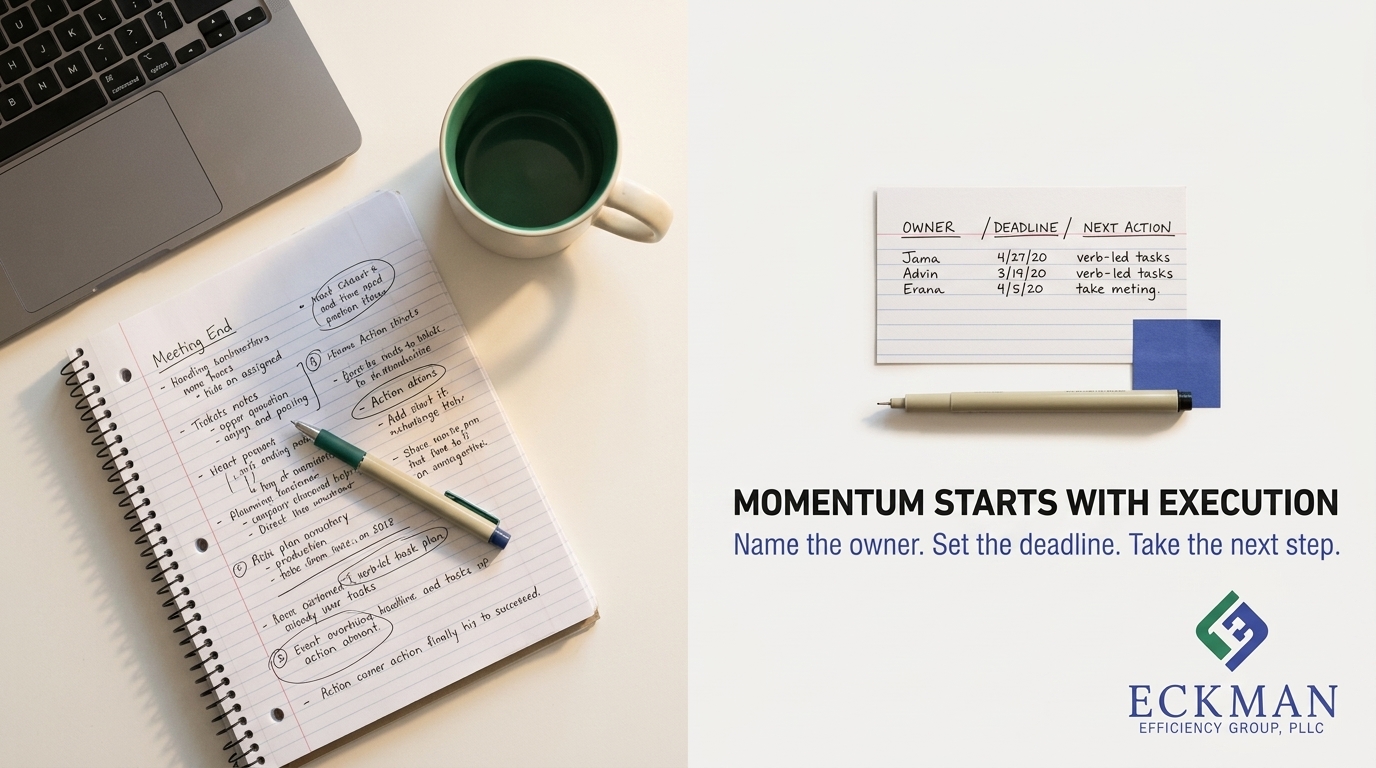
Turning decisions into actions requires building habits that ensure follow-through. This involves a clear plan and commitment to execution.
Assigning Ownership and Deadlines
Assign an owner to each action item. This person is responsible for the task’s completion. Without ownership, tasks fall through the cracks. Next, set a realistic deadline. A task without a deadline is simply a suggestion. Deadlines create urgency and focus. Consider this: a task with a clear owner and deadline is 50% more likely to be completed on time. This step ensures everyone knows their role and the timeline for execution.
Meeting Close-Out Checklist
Creating a close-out checklist is vital. Here’s a simple one to start with:
-
Summarize decisions made: Ensure everyone is on the same page.
-
Assign tasks: Clearly state who is responsible for each task.
-
Set deadlines: Agree on when tasks should be completed.
-
Clarify the next meeting: Schedule a follow-up to review progress.
Using this checklist turns your meeting from a discussion into a plan of action. It’s a simple but effective way to ensure nothing is forgotten and everyone knows what to do next. Discover more about creating effective team agreements here.
From Strategic Clarity to Operational Excellence

Clarity in your strategy is essential, but excellence comes from executing that strategy effectively.
Leadership Execution and Accountability
Strong leadership is about ensuring that decisions are implemented. It’s not enough to make strategic choices; you must follow them through. Accountability plays a crucial role here. Leaders must hold themselves and their teams accountable for the tasks and decisions made during meetings. This ensures that everyone contributes to the organization’s goals. Remember, leadership isn’t just about making decisions; it’s about ensuring those decisions lead to action.
Installing an Execution Operating System
To achieve operational excellence, you need an execution operating system. This system integrates decision-making, task assignment, and follow-through into your workflow. It ensures that every decision made is a step towards progress. This system isn’t just about efficiency; it’s about creating a culture of accountability and action. By installing such a system, you empower your team to turn strategic clarity into tangible results. Explore how to establish lasting team agreements here.
Frequently Asked Questions
Why do meetings often end without action?
Meetings often lack a clear follow-up process. Without assigning specific tasks and deadlines, agreement doesn’t translate into action. This lack of clarity leads to stagnation.
How can I ensure tasks are completed after meetings?
Assign ownership and set deadlines for each task during the meeting. Use a close-out checklist to summarize decisions, assign tasks, set deadlines, and schedule follow-ups.
What is an execution operating system?
An execution operating system integrates decision-making, task assignment, and follow-through into a structured workflow. It ensures decisions lead to action and creates a culture of accountability and progress.