
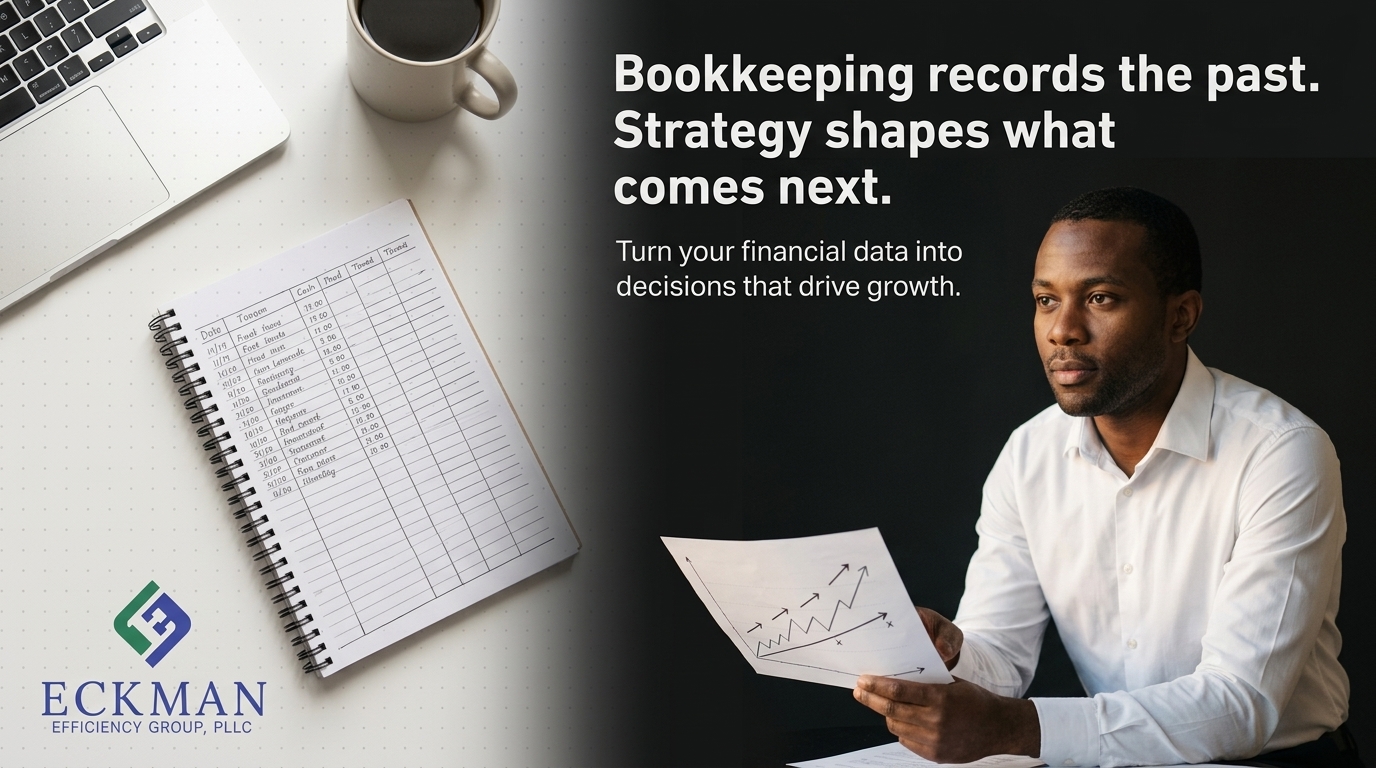
Bookkeeping is a record of what’s already happened. It keeps your books clean but doesn’t answer the question: what’s next? When your organization grows and adds staff or programs, those monthly reports need to do more than just sit on a shelf—they must guide your decisions on spending, staffing, and timing. Understanding the difference between bookkeeping vs financial strategy is key to turning numbers into clear, actionable plans that support sustainable growth. Learn more here.
Understanding Bookkeeping vs Financial Strategy
When it comes to managing finances, knowing the difference between bookkeeping and financial strategy is crucial. Let’s explore how each plays a role in your organization’s success.
Role of Bookkeeping in Organizations
Bookkeeping serves as the backbone of your financial records. It ensures accuracy and compliance. This process involves recording daily transactions, managing invoices, and maintaining ledgers. While it provides a snapshot of your financial standing, it’s not enough for strategic decision-making. Bookkeeping is essential for keeping track of where you’ve been. It details your expenses and income, making tax time less daunting. It also helps you avoid financial discrepancies. Yet, relying solely on bookkeeping means you’re looking backward, not forward.
From Records to Strategic Decisions
Transitioning from mere records to strategic decisions requires more than just numbers. This is where financial strategy steps in. It’s about interpreting data and planning future actions. Financial strategy involves analyzing trends, forecasting, and aligning financial goals with your organization’s objectives. It transforms data into actionable insights, guiding your growth and improving decision-making processes. By integrating strategy, you can predict outcomes, allocate resources wisely, and anticipate market changes. The key is leveraging data to drive your organization forward.
Why Strategy Matters for Growth
Why is strategy pivotal for growth? It creates a roadmap for success. While bookkeeping shows historical data, strategy sets the direction for future actions. It allows you to pinpoint opportunities, mitigate risks, and steer your organization toward sustainable growth. With a strategic approach, you can optimize cash flow, ensure profitability, and make informed decisions. Strategy turns financial chaos into clarity, helping you achieve long-term goals and maintain a competitive edge. Without it, growth becomes a guessing game, leaving potential untapped.
Components of a Financial Strategy
A robust financial strategy comprises several key components. Each element is designed to support informed decision-making and growth. Let’s break down these components.
Key Performance Indicators and Dashboards
Key Performance Indicators (KPIs) and dashboards are vital tools. They provide a snapshot of your organization’s performance. KPIs help track progress against goals, offering real-time insights into your financial health. Dashboards visually represent data, making it easier to identify trends and areas needing attention. By monitoring KPIs, you can assess the effectiveness of strategies and make adjustments as needed. These tools empower leaders to make data-driven decisions, enhancing operational efficiency and boosting overall performance.
Budgeting and Cash Flow Forecasting
Budgeting and cash flow forecasting are fundamental components of financial strategy. They ensure financial stability and predictability. Budgeting involves planning and allocating resources to achieve specific objectives. It sets spending limits and helps control expenses. Cash flow forecasting, on the other hand, predicts future cash inflows and outflows. It helps you anticipate financial challenges and plan accordingly. Together, these tools provide a clear picture of your financial position, enabling proactive decision-making and minimizing risks.
Decision-Ready Reporting for Leaders
Decision-ready reporting equips leaders with critical information for effective decision-making. It involves generating reports that highlight key financial insights and trends. These reports are concise, actionable, and tailored to your organization’s needs. They enable leaders to make informed choices, aligning financial goals with strategic objectives. By providing a clear understanding of financial performance, decision-ready reporting supports transparency and accountability. It fosters a proactive approach, helping you stay ahead in a competitive landscape.
Leveraging Financial Strategy for Growth
Leveraging financial strategy can significantly impact your organization’s growth and success. Here’s how you can align strategy with operational goals.
Aligning Strategy with Operational Goals
Aligning strategy with operational goals is essential for achieving growth. It ensures that every aspect of your organization works toward a common purpose. This alignment enhances efficiency, reduces redundancies, and maximizes resources. By integrating strategy into daily operations, you create a cohesive framework that drives progress. It empowers teams to work collaboratively, fostering innovation and improving overall performance. With clear objectives and a shared vision, your organization can navigate challenges and seize opportunities.
Empowering Leaders with Data-Driven Decisions
Empowering leaders with data-driven decisions is a game-changer for growth. Data provides valuable insights, enabling leaders to make informed choices. By leveraging data, leaders can identify trends, evaluate risks, and optimize strategies. It enhances decision-making accuracy, reducing guesswork and improving outcomes. Data-driven decisions foster a culture of accountability and transparency, promoting a proactive approach to challenges. With the right data at their fingertips, leaders can drive sustainable growth and achieve long-term success.
Partnering with a Fractional CFO for Success
Partnering with a fractional CFO offers expertise and guidance without the full-time commitment. A fractional CFO provides strategic financial leadership, helping you navigate complex financial landscapes. They offer insights into financial planning, risk management, and growth strategies. By collaborating with a fractional CFO, you gain access to specialized knowledge and support tailored to your organization’s needs. This partnership enhances financial decision-making, ensuring sustainable growth and profitability.
Frequently Asked Questions
What is the main difference between bookkeeping and financial strategy?
Bookkeeping focuses on recording and maintaining financial records, while financial strategy involves analyzing data to make informed decisions for future growth.
How do KPIs and dashboards aid in financial strategy?
KPIs and dashboards provide real-time insights into organizational performance, helping leaders track progress, identify trends, and make data-driven decisions.
Why is budgeting important for financial strategy?
Budgeting ensures financial stability by planning and controlling expenses. It helps allocate resources effectively and supports strategic decision-making.
What role does a fractional CFO play in an organization?
A fractional CFO offers strategic financial leadership, providing insights into planning, risk management, and growth strategies without a full-time commitment.
How does data-driven decision-making benefit organizations?
Data-driven decisions enhance accuracy, reduce guesswork, and improve outcomes, fostering a proactive approach to challenges and promoting sustainable growth.